Lack of Commodity Pricing Knowledge is Costing Nigerian Farmers Billions, Says IBM Bangis
Commodity.ng Co-Founder Calls for a Data Revolution in Agriculture
ABUJA, NIGERIA — The Co-Founder of Commodity.ng, Ibrahim Muhammed (IBM Bangis), has called for a nationwide agricultural data revolution, warning that the lack of reliable commodity pricing information is silently costing Nigerian farmers billions of naira annually and slowing the growth of the country’s agricultural sector.
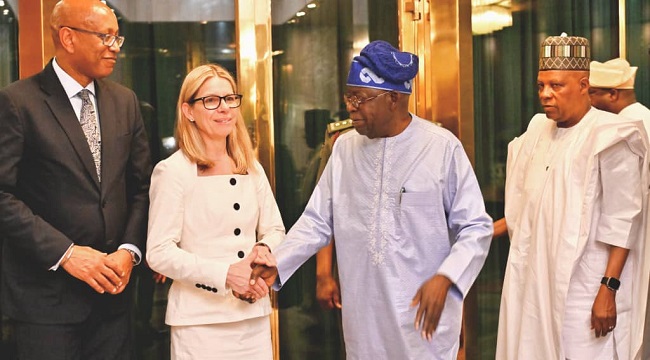
Speaking at the Transcorp Hilton Hotel, Abuja, during the “Farmers in Nigeria” conference organized by the Federal Ministry of Agriculture, IBM Bangis said that while Nigeria has millions of hardworking farmers, many continue to struggle financially because they operate without access to accurate market data.
According to him, information has become as important as land, fertilizer, and machinery in modern agriculture, yet many Nigerian farmers still make critical business decisions without the data needed to maximize profits.
“Agriculture is no longer just about planting and harvesting. It is about making informed business decisions. A farmer who has access to market intelligence has a competitive advantage over one who does not. Unfortunately, millions of Nigerian farmers are still farming in the dark.”
The Hidden Crisis in Nigerian Agriculture
Nigeria is blessed with vast agricultural resources and produces large quantities of maize, rice, sorghum, millet, soybeans, sesame, cassava, ginger, cocoa, and other commodities. Yet despite this enormous potential, many farmers remain trapped in poverty.
IBM Bangis explained that one of the most overlooked reasons is the absence of transparent and accessible commodity pricing information.
Across rural communities, farmers often depend on local traders and middlemen to determine the value of their produce. Because they lack access to current market prices from major commercial hubs such as Lagos, Kano, Kaduna, Ibadan, Abuja, Port Harcourt, and Onitsha, they frequently sell their produce below market value.
A farmer may sell a bag of maize in a rural community for ₦45,000 without knowing that the same commodity is trading at ₦58,000 or ₦60,000 elsewhere. The difference may seem small on a single bag, but across hundreds of bags and millions of farmers, the losses become enormous.
“Many farmers are not poor because they cannot produce. They are poor because they do not have access to the information needed to negotiate better prices. Information asymmetry remains one of the greatest barriers to agricultural prosperity in Nigeria,” he stated.
How Poor Pricing Knowledge Affects Farmers
IBM Bangis identified several ways inadequate pricing information negatively affects agricultural businesses:
Reduced Income
When farmers do not know prevailing market prices, they often accept the first offer made by buyers. This reduces their earnings and weakens their financial position.
Limited Expansion
Lower profits mean farmers have less capital to reinvest in their operations. As a result, many cannot expand their farmland, purchase machinery, improve irrigation systems, or adopt modern farming techniques.
Increased Exploitation
The information gap creates opportunities for exploitation by middlemen who have access to market intelligence unavailable to farmers.
Poor Planning
Without price trends and historical market data, farmers struggle to determine which crops offer the highest returns and when to sell for maximum profitability.
Reduced Access to Finance
Banks and investors increasingly rely on data when making lending decisions. Farmers operating without documented pricing and market information often find it difficult to secure financing.
Why Data is the New Fertilizer
According to IBM Bangis, agricultural data has become one of the most valuable resources in global agriculture.
He described data as the “new fertilizer” capable of increasing productivity, reducing losses, improving decision-making, and transforming farming into a profitable enterprise.
“In today’s world, the most successful farmers are not necessarily those with the largest farms. They are the farmers with the best information.”
He noted that modern agricultural economies rely heavily on data to guide production, logistics, marketing, financing, and risk management.
How Data Can Transform Nigerian Agriculture
1. Better Market Decisions
Real-time commodity pricing allows farmers to know exactly what their products are worth across multiple markets.
Instead of relying solely on local buyers, farmers can compare prices across regions and choose the most profitable markets.
This transparency increases competition among buyers and ensures farmers receive fair value for their produce.
2. Smarter Crop Selection
Data enables farmers to identify commodities experiencing strong demand and favorable pricing trends.
For example, if market intelligence shows rising demand for sesame, soybean, ginger, or rice, farmers can strategically allocate more land to those crops.
This helps maximize profitability while reducing uncertainty.
3. Reduced Post-Harvest Losses
Nigeria loses billions of naira annually through post-harvest losses.
Data-driven logistics systems can help farmers locate buyers faster, improve transportation planning, and reduce the time produce spends in storage.
4. Improved Food Security
When farmers have access to reliable market intelligence, they are more likely to increase production because they can confidently anticipate returns on investment.
Higher production levels ultimately contribute to national food security and stable food supplies.
5. Better Access to Credit
Financial institutions prefer lending to businesses with measurable data.
Farmers who can demonstrate production records, market prices, sales history, and demand forecasts are more likely to qualify for loans and investment opportunities.
6. Stronger Agricultural Policies
Government agencies can use agricultural data to monitor commodity supply, forecast shortages, and design policies that stabilize food prices.
Better data leads to better decision-making at both farm and national levels.
The Role of Technology
IBM Bangis emphasized that technology is rapidly closing information gaps in agriculture.
Digital platforms, mobile applications, commodity exchanges, artificial intelligence tools, and market intelligence systems are making it easier than ever for farmers to access critical information.
He highlighted the growing role of Commodity.ng in providing timely commodity prices, market trends, agricultural insights, and intelligence that empower farmers, traders, processors, and investors.
According to him, technology is democratizing access to information that was once available only to large corporations and major commodity traders.
“The future farmer will not compete with tractors alone. The future farmer will compete with data. Those who understand data will understand markets, and those who understand markets will build wealth.”
Building a Data-Driven Agricultural Economy
The Commodity.ng co-founder urged governments, agribusinesses, financial institutions, development organizations, and technology companies to invest heavily in agricultural data infrastructure.
He called for improved rural internet connectivity, digital literacy programs, commodity market information systems, and data-sharing initiatives that can empower millions of farmers nationwide.
He argued that achieving Nigeria’s food security goals and agricultural transformation agenda will require more than increased production.
The country must also build a modern agricultural ecosystem where farmers have access to the information needed to make informed business decisions.
A Call to Action
As Nigeria seeks to diversify its economy and reduce dependence on oil revenues, IBM Bangis believes agriculture presents one of the country’s greatest opportunities for sustainable growth.
However, he stressed that unlocking the sector’s full potential will require empowering farmers with one of the most powerful tools in the modern economy: data.
“Every successful agricultural economy is built on information. If we want Nigerian farmers to prosper, if we want food prices to stabilize, and if we want agriculture to become a true engine of economic growth, then we must place data and market intelligence at the center of our agricultural strategy.”
His remarks were met with strong support from stakeholders at the conference, many of whom agreed that improving access to commodity pricing information could significantly increase farmer incomes, strengthen food security, attract investment, and accelerate Nigeria’s agricultural transformation.
For Nigeria’s farmers, the message was clear: the future of agriculture belongs not only to those who cultivate the land but also to those who understand the data behind the market.
Discover more from Commodity Nigeria
Subscribe to get the latest posts sent to your email.